



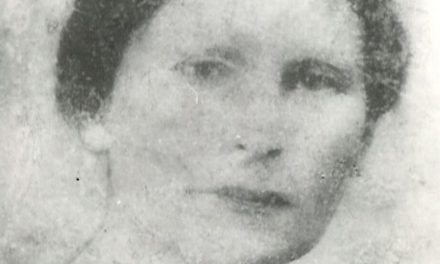










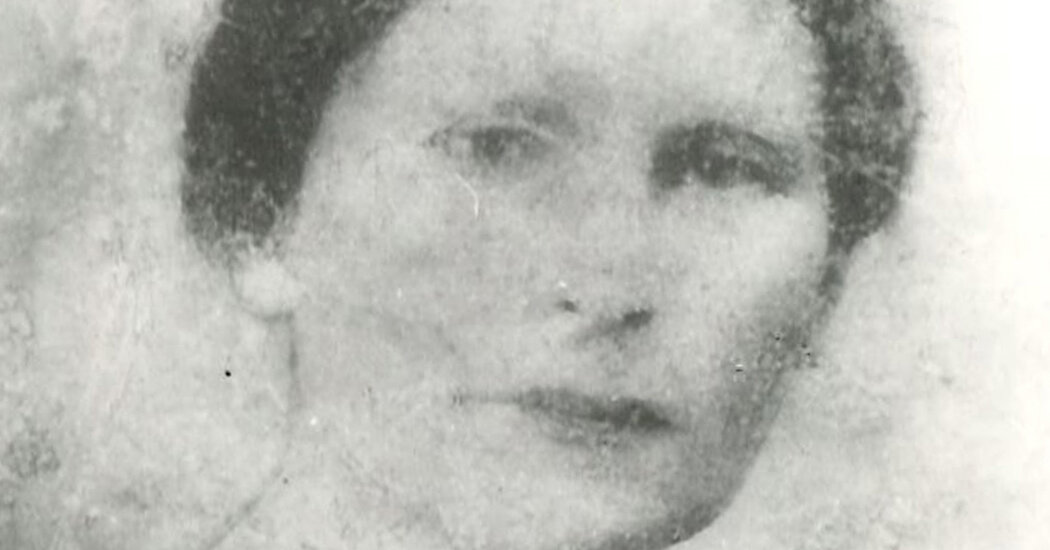
No longer overlooked: Sabina Spielrein, visionary between Freud and Jung
This article is part of Overlooked, a series of obituaries about notable people whose deaths went unreported in the Times beginning in 1851.
Sigmund Freud, Carl Jung – and Sabina Spielrein. When the field of psychoanalysis emerged in the early 20th century, these scholars were linked in a triangular dialogue that included letters, scholarly articles, and debates. But for decades, Spielrein’s contributions were overshadowed by both men. Only recently has her role been fully recognized.
In 1911, Spielrein presented a bold theory at an event organized by Freud at the Vienna Psychoanalytic Society.
During her talk, she suggested that the same internal forces that drive people to love, desire, and create can also cause them to want to destroy—even themselves—an idea that was central to her 1912 work, “Destruction as a Cause of Becoming.”
When Freud published his essay “Beyond the Pleasure Principle” (1920), he gave the drive that stood in contrast to the sexual instinct and which he called Eros a name – Thanatos or death drive.
He quoted Spielrein in a footnote, and for many decades she remained just that, despite publishing more than 35 papers in three languages and making significant contributions to the fields of psychoanalysis and child psychology.
Today, however, scholars credit her with ideas that predate the work of the field’s most celebrated thinkers—including themes that resonated with feminist theory in the 1960s and provided early insights into language development in children.
“People have increasingly realized that in their work lay the seeds of ideas that then 50, 60 and 100 years later became much more acceptable and mainstream,” John Schwanzer, who wrote “Sex Versus Survival: The Life and Ideas of Sabina Spielrein” (2014), said in an interview.
Spielrein’s importance came to light after her diary and letters were published in the 1980s. These documents revealed that she had intensive contact with Freud and a romantic relationship with the Swiss psychiatrist Carl Jung.
“The early scholarship focused on her work in relation to other people’s work, like, ‘What did Jung take from her, and what did Freud take from her?'” said Klara Naszkowska, an associate professor of women’s and gender studies at Montclair State University in New Jersey and founding director of the International Association for Spielrein Studies in Poland in 2017. “Now we’re trying to talk about her work separately from other people’s work.”
Spielrein’s theories were an important precursor to the 1960s movement called écriture féminine, which focused on female agency and creativity.
“The main themes of Spielrein’s theory – motherhood, female body, embodied language, touch, ancient melody – all anticipate the dominant motifs in the writings of écriture féminine,” Naszkowska said. “In their concepts, mothers are the source of all language, in contrast to the silent, powerless, deficient, unimportant femininity and motherhood,” as it was portrayed in Western European cultural thought at the time.
Spielrein was also recognized for her creative approach to linking psychoanalysis with other sciences, including biology and linguistics. “The Origin of the Words ‘Papa’ and ‘Mama,'” an article she published in 1922, explored early childhood language development and preceded similar ideas proposed in the 1940s by two of the established founders of child psychoanalysis, Anna Freud – Sigmund’s daughter – and Melanie Klein.
Sabina Nikolayevna Shpilrain was born on November 7, 1885 in Rostov-on-Don, Russia, the daughter of the merchant Nikolai Arkadyevich Shpilrain and the trained dentist Eva Marcovna Lyublinskaya. Her parents were Jewish and her maternal grandfather and great-grandfather were rabbis. (Sabina used the German transcribed version of her last name in her published work.)
The eldest of five children in a wealthy family, Sabina, along with her three brothers and sister, was raised to speak multiple languages and play music.
When her sister died of typhus at the age of six, Sabina suffered an emotional breakdown and was described as “hysterical”. When she was around 19, she was admitted to the Burghölzli psychiatric hospital in Zurich and placed in the care of the Swiss psychiatrist and humanist Eugen Bleuler and his deputy Carl Jung.
During the treatments, Jung used a method of word association, a kind of precursor to talk therapy. Spielrein became interested and curious about medicine. She recovered quickly and within a few months applied to study medicine at the University of Zurich, which was affiliated with Burghölzli.
Schwanzer said Spielrein had a “crazy crush” on Jung. In the book “Sabina Spielrein and the Beginnings of Psychoanalysis: Image, Thought, and Language” (2019), edited by Pamela Cooper-White and Felicity Brock Kelcourse, Kelcourse wrote that Spielrein’s diary entries from 1909 to 1912 reveal “a young woman caught in an intense transference” – a redirection of feelings toward her analyst that would otherwise have been directed toward a loved one.
“According to her account, he seduced her,” Cooper-White said in an interview. “She writes in several places about how hesitant she was. To me, that resonates with everything we know today about the abuse of interns or women in subordinate roles who are sexually exploited by their mentors.”
A 1993 nonfiction book by John Kerr, “A Most Dangerous Method: The Story of Jung, Freud, and Sabina Spielrein,” described Jung’s relationship with Spielrein as part of a dangerous psychoanalytic dynamic. “I find it at least plausible that the two stopped before intercourse,” he wrote.
David Cronenberg’s 2011 film adaptation of Kerr’s book “A Dangerous Method,” starring Keira Knightley, Michael Fassbender as Jung and Viggo Mortensen as Freud, dramatized a sexual affair.
“The ‘did she or didn’t she’ discourse is, in my opinion, a highly disrespectful distraction from her achievements as a professional and thinker,” Schwanzer said.
Cooper-White said the suggestion of impropriety led to Spielrein’s removal from the story, while Jung and Freud’s reputations remained intact.
Spielrein received his doctorate from the University of Zurich in 1911 and soon moved to Vienna to join Freud’s circle. “She immediately declared her independence from Jung and established herself as an original thinker in the spirit of psychoanalysis,” Kelcourse wrote.
Spielrein became the second female member of the Vienna Psychoanalytic Society (after Margarethe Hilferding), whose founder was Freud. She later joined psychoanalytic societies in Geneva and Russia, lectured at many universities and worked as an analyst and medical consultant.
In 1912 she married the doctor Pavel Sheftel; a year later they had a daughter, Renata. She published numerous essays in 1913, including the seminal work “Contributions to Understanding a Child’s Mind.”
The First World War separated the family: Sheftel was called up as a military doctor in his native Russia, and Spielrein brought Renata to Switzerland, where she worked in various medical professions, including as an eye surgeon. In 1920 she worked at the Rousseau Institute in Geneva, where she analyzed Jean Piaget, the school’s director, and influenced his work on child development.
She and Renata reunited with Sheftel in Russia in 1923, and the couple had their second daughter, Eva, in 1926. Spielrein worked for the Moscow State Psychoanalytic Institute and the First Moscow State Medical University in pedology, an emerging discipline that combined pediatrics and child psychology. It would be the focus of the rest of her career.
In 1942, Spielrein and her two daughters were among an estimated 27,000 Soviet Jews rounded up in Rostov-on-Don and forced to the edge of a ravine. There they were massacred by a Nazi murder squad.
The circumstances of her death remained a mystery until Magnus Ljunggren, a Swedish journalist and professor of Russian literature, discovered her fate in 1983 by compiling eyewitness accounts. Although there is still some uncertainty about the exact time of her death, Sabine Richebacher, a Spielrein biographer, puts it as August 11, 1942. She would have been 56 years old.
Her contributions to science were almost completely forgotten until her diaries were discovered in Geneva in 1977. The Italian Jungian psychoanalyst Aldo Carotenuto subsequently published A Secret Symmetry: Sabina Spielrein Between Jung and Freud, a compilation of her writings, in Italian and English.
But as Naszkowska, the scientist, noted: “It is still in the discovery phase.”