







Eli Lilly wins in the GLP-1 market over Novo Nordisk, earnings show
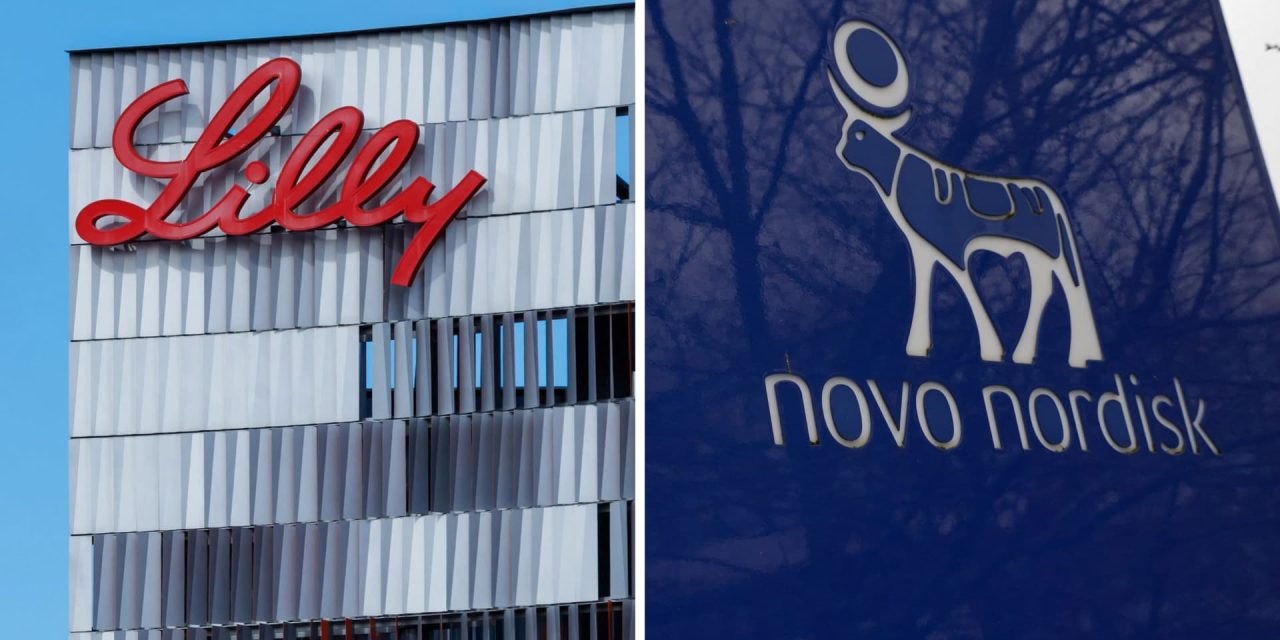
The Eli Lilly and Novo Nordisk logos.
Mike Blake | Tom Little | Reuters
It’s the story of two drugmakers in the red-hot obesity drug market.
Both Novo Nordisk And Eli Lilly are struggling with lower prices in the USA, but their forecasts for 2026 differ greatly: While Novo is preparing for a decline in sales, Lilly is seeing increasing sales again thanks to its blockbuster drugs.
The split forecasts – despite similar headwinds – underscore the strength of Lilly’s position in the market for obesity and diabetes drugs, supported by, among other things, more effective injections and its early push into direct-to-consumer sales. While Novo Nordisk has effectively made the drugs mainstream, Lilly has since established a clear market share lead – and forecasts show the company is only likely to widen its lead this year.
“The difference in revenue momentum and market share performance was visible throughout 2025, but the dichotomy between the two companies’ outlooks was further reinforced in this 24-hour period, with Novo performing below consensus and Lilly above consensus expectations,” Leerink Partners analyst David Risinger told CNBC on Wednesday.
“That really solidified an investor’s belief that Lilly will be the dominant player in the obesity space going forward,” he added.
This year, all eyes will be on how Lilly’s upcoming obesity pill Orforglipron compares to Novo’s own oral Wegovy drug, which had an explosive launch in the US this year.
In an interview on CNBC’s “Squawk Box” on Wednesday, Lilly CEO David Ricks said 20 million to 25 million patients are currently taking both companies’ drugs. But he said the total addressable market of obesity patients is “gigantic.”
Different views
According to LSEG, Lilly on Wednesday forecast revenue of $80 billion to $83 billion in 2026, beating analysts’ expectations of $77.62 billion.
The midpoint of this forecast means sales growth of 25% this year.
By contrast, Novo warned Tuesday that sales and profit will fall 5% to 13% this year as prices fall in the U.S. and exclusivity for its blockbuster obesity and diabetes drugs expires in China, Brazil and Canada.
Novo Nordisk CEO Mike Doustdar (left) and Eli Lilly CEO David Ricks listen as President Donald Trump speaks during an event about weight loss medications in the Oval Office on Nov. 6, 2025.
Andrew Caballero Reynolds | Afp | Getty Images
Lilly also pointed to a “global price decline in the low to mid-teens.” [percentages] This comes after both companies’ groundbreaking “most favored nation” agreements in November with President Donald Trump to reduce the cost of obesity and diabetes drugs, as well as their recent efforts to further reduce direct prices for their treatments.
The Trump deals are expected to reduce both companies’ sales but ultimately increase prescriptions for their drugs. Still, Lilly is optimistic about other factors that will help offset this pricing pressure.
These include continued global demand for its obesity drug Zepbound and diabetes counterpart Mounjaro, as well as the expected launch of its GLP-1 anti-obesity pill in the second quarter, subject to US approval. Lilly also noted that federal Medicare coverage of obesity treatments will begin for the first time at least in July, which is one of the beneficial features of the drug pricing deals with Trump.
Lilly’s Ricks told CNBC that the coverage will open access to 40 million new Medicare enrollees, “and that could be quite volume-wise.”
Overall, Risinger called Lilly’s forecast “very encouraging” and said the “price-per-volume trade-off is working well” for the company.
He said tirzepatide, the active ingredient in Zepbound and Mounjaro, was “superior” in its effectiveness and tolerability compared to semaglutide, the ingredient in Novo’s obesity and diabetes medications. This was demonstrated in a head-to-head clinical trial conducted by Lilly in 2024, and prescribing trends show that the company’s medications are preferred by prescribers.
“I think that’s what’s driving Lilly’s market share gain relative to Novo,” Risinger said.
Another factor that sets Lilly and Novo apart is patent exclusivity. While Novo said expiring patents posed a challenge in some international markets, Lilly’s Ricks said tirzepatide should remain protected in key markets until “the second half of the 2030s.”
Risinger noted that Lilly is still working to advance global distribution of tirzepatide, which received U.S. approval in 2023 to treat obesity.
All eyes on pills
A pharmacist checks out a box of Wegovy pills at a pharmacy in Provo, Utah, on Jan. 15, 2026.
George Frey | Bloomberg | Getty Images
Novo Nordisk is the first company to bring a GLP-1 anti-obesity pill to market, recording 50,000 weekly prescriptions in just under three weeks of its launch. But investors are watching to see how that will change when Lilly’s pill becomes available to patients later this year.
In an interview with CNBC’s “Mad Money,” Novo CEO Mike Doustdar said he is confident the company can compete with Lilly.
“We clearly have the most effective weight loss pill there is, and I’m very bullish and optimistic if they come out with their pill and we have to fight it,” Doustdar said.
He refers to clinical trial data that suggests Novo’s Wegovy pill promotes comparable weight loss to its injectable counterpart, about 15%. Meanwhile, Lilly’s pill appears to be slightly less effective, based on separate study data.
Risinger said Novo’s launch of the pill benefited from the fact that the company uses the Wegovy brand name, which is familiar to many patients, and immediately launched direct-to-consumer advertising for the product in early January.
But he said Lilly could take advantage of the convenience of her pill.
Orforglipron is a small molecule drug that is more easily absorbed by the body and does not require dietary restrictions, like Novo Nordisk’s pill, which is a peptide drug. Patients are not allowed to drink more than 100 ml of water with the Wegovy pill and must wait 30 minutes each day before eating or drinking anything else.
Novo maintains that these requirements won’t hinder its launch, but Risinger said it could help Lilly’s pill eventually generate higher sales worldwide.