
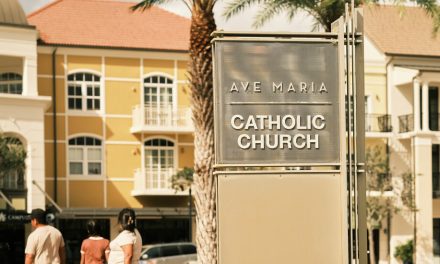








Measles outbreak hits Ave Maria University in Florida

More than 40 cases of measles have been reported at Ave Maria University in southwest Florida, the largest outbreak on a college campus in recent history.
The outbreak at the private Catholic college has raised concerns among university leaders and health experts that measles, largely considered a childhood disease, could pose a growing threat to unvaccinated students.
Measles has already shut down several campuses across the country this year.
In South Carolina, more than 80 students at Clemson University and Anderson University were quarantined in January after each institution reported a case on campus. Officials at the University of Wisconsin-Madison have notified about 4,000 people this month that they have been exposed to the virus. Also that month, University of Florida officials informed students that two classes on the Gainesville campus had been exposed.
Most colleges require students to have proof of vaccination against measles, but many allow students to claim religious or personal exemptions. There is no national data on vaccination rates among college students, but anecdotally, universities have seen an increase in in-person exemptions in recent years, Dr. Sarah Van Orman, former president of the American College Health Association and chief campus health officer at the University of Southern California.
Dr. Van Orman said many colleges are now preparing for the possibility of a measles outbreak on their campuses, something that was considered very unlikely just a few years ago.
“For most of us, it’s not a matter of if we get a case, it’s a matter of when,” said Dr. VanOrman.
Before the introduction of measles vaccination in the 1960s, adult disease was rare. Almost all children contracted measles before the age of 15. About 450 people died from the infection each year, while the rest built up natural immunity long before adulthood.
But today’s college students grew up in a very different world. Given the country’s high vaccination rates, it is unlikely that they would have been exposed to the virus as a child. And today’s young adults were children in the early years of the modern vaccine hesitancy movement, said Michael Osterholm, an infectious disease expert at the University of Minnesota.
“We are now seeing a group of people in their early 20s who are not protected,” he said. “They have never had measles, they have never been vaccinated, and their numbers are so large that we will see more outbreaks.”
Ave Maria University asks its students to provide proof of measles vaccination, which also protects against mumps and rubella. However, the college also allows its students to opt out if they sign a waiver certifying that they are aware of the risks of the diseases, in accordance with Florida law.
The university did not respond to a request for comment. Its website says the “vast majority” of people on campus are vaccinated, but it’s unclear exactly what percentage of students have exemptions. Even a small decline in vaccination rates can leave a community vulnerable to an outbreak of measles, a highly contagious disease.
University campuses are also an “ideal” place for viruses like measles to spread, Dr. Jonathan Temte, former chair of the Centers for Disease Control and Prevention’s Vaccine Advisory Committee.
Campuses often bring together people from across the country and around the world, increasing the risk that an infected student will bring the virus from a place where it spreads. And once there is a case at a university, it is difficult to prevent spread in unvaccinated groups because students live, eat, study and socialize together. It is also possible for the virus to infect vaccinated people whose immunity to the shots has waned over time, although this is far less common.
In recent months, colleges have refined their measles control plans and collected vaccination data to know which students would need to quarantine if they were infected, Dr. VanOrman. Some universities are even considering stricter vaccination requirements.
This outbreak comes at an already dire time in United States history for the disease. There were 2,280 confirmed cases of measles nationwide in 2025, more than any year since the virus was declared eradicated in 2000. Lauren Gardner, a public health expert who leads a measles tracking project at Johns Hopkins University, said she expects the number of cases to be even higher this year, due in large part to declining vaccination rates among children.
More than 700 cases have been reported this year, most of them linked to a raging outbreak in South Carolina. Florida has one of the highest case numbers in the country, due in large part to the Hail Mary outbreak.