














Life Time and Planet Fitness’ profits show a K-shaped economy
Two of the largest U.S. gym operators delivered the same headline in their recent earnings reports: strong growth.
But beneath the surface, Life Time Group Holdings And Planet Fitness told very different stories about the American consumer. She made clear that the gap is widening between higher-income households, who continue to spend freely, and more price-sensitive consumers, who are beginning to show signs of overspending.
The Planet Fitness logo can be seen on the exterior of the gym at Loyal Plaza in Loyalsock Township, Pennsylvania.
Paul Weaver | Light rocket | Getty Images
Both companies reported double-digit percentage revenue growth, increasing membership and expanding footprint in 2025. However, their respective forecasts for 2026 point to a “K-shaped” economy, a term that describes a split in spending trends between higher and lower income groups. Here’s what we learned.
Lifetime: Wealthy consumers continue to spend money
Life Time’s earnings showed that wealthy Americans are still spending money, especially on their health and well-being.
The company is in the fourth quarter Total revenue increased 12.3% year over year to $745.1 million. CFO Erik Weaver attributed the increase to “continued execution across our centers,” including higher average premiums and greater utilization of in-center stores.
The company, which operates large-format fitness clubs with amenities such as pools, spas and cafes, increased membership fees last year around $10 to $30 per member. The change has not slowed demand – Membership and engagement have continued to increase.
A growing share of Life Time’s revenue comes from internal expenses, which topped $191 million in the fourth quarter. Members take full advantage of additional personal training, spa services, and food and beverage as they view the space as a lifestyle destination.
Average revenue per center membership was $882, up 10.8%.
“It is a very engaged membership model rather than a non-utilizing membership model,” said Bahram Akradi, CEO of Life Time Group Holdings. “We are basically working at an optimal level at the moment.”
Although the company has far fewer locations than Planet Fitness, it generates significantly more revenue, underscoring the higher purchasing power of its customer base.
“The model demonstrated its resilience in a difficult macroeconomic 2025, where in-center sales increased,” said John Baumgartner, an analyst at Mizuho. “And downside risks are limited by a membership bias favoring high-income households and differentiated club activities.”
The results suggest that higher-income consumers remain relatively insulated from broader economic pressures and continue to prioritize discretionary health spending.
Planet Fitness: Sales grow, but outlook disappointing
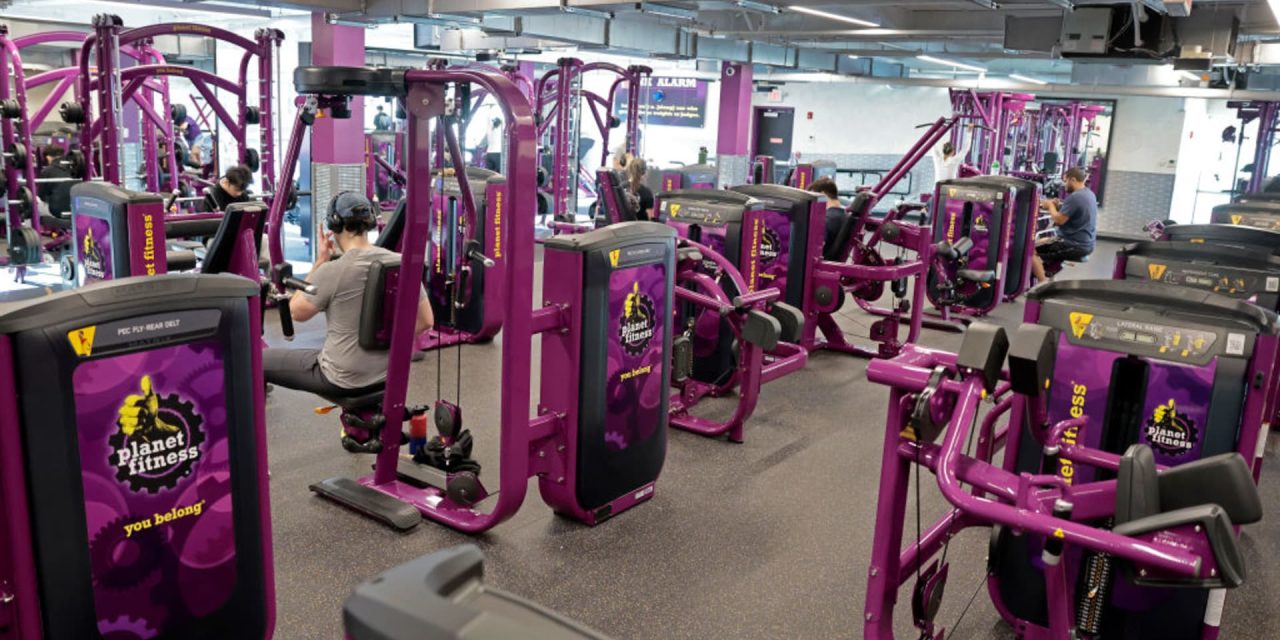
The weight room at the new Planet Fitness at 226 Harvard Avenue in Allston.
Pat Greenhouse | Boston Globe | Getty Images
Planet Fitness also experienced strong growth, adding 1.1 million new members in 2025 and achieving double-digit sales increases.
However, investors focused on the outlook, which fell short of Wall Street’s expectations. The company forecast slower fiscal 2026 sales growth of 9% and same-store sales of 4% to 5% weaker than expected, raising concerns about demand.
However, Planet Fitness remains positive about the growth and says the expected decline in membership numbers is only temporary.
“Our attendance trends were impacted by the late January storms and cold weather in many of our markets, and we experienced a slightly higher than expected cancellation rate last month,” said Jay Stasz, CFO of Planet Fitness. “It is noteworthy that recent attrition trends are returning in line with our expectations.”
Planet Fitness has also been testing price increases in some markets, which are expected to be fully rolled out in summer 2026. The company is also investing in new amenities like red light therapy and additional classes to increase revenue per member and attract younger members.
That strategy could support long-term growth, but some analysts are skeptical, saying the “forecast gap” between Planet Fitness’s results and Wall Street’s expectations is particularly frustrating.
“The company now faces a credibility hurdle,” said Stifel analyst Chris Cull. “Is the 2026 forecast conservative or are the targets for the coming year unrealistic? Until the company shows a clearer path to acceleration, we think the stock is likely to move.”
A muted outlook for 2026 suggested some uncertainty about how much further core customers can stretch their spending.
The growing gap between consumers
Taken together, the results illustrate a broader shift in the U.S. economy.
Higher-income consumers, reflected in Life Time’s performance, continue to absorb price increases and spend on premium experiences. Meanwhile, Planet Fitness points out that while price-sensitive customers are engaged, they are more reluctant to spend money.
This is not a problem unique to fitness and occurs across all industries. Airlines are scrambling to expand luxury offerings as higher-income travelers continue to spend. Meanwhile, fast food companies are relying on inexpensive meals to attract more price-conscious customers, reinforcing the idea of a K-shaped economy.
Planet Fitness’ performance in the coming quarters could serve as an indicator of how much spare purchasing capacity remains for low- and middle-income consumers.
Sharon Zackfia, an analyst at William Blair, lowered her company’s forecasts for Planet Fitness’ 2026 membership growth from 1 million to 800,000 due to forecast weakness in the first quarter, which typically accounts for 60% of full-year signups. Still, the forecast didn’t dampen the company’s optimism about the business.
“We reiterate our Outperform rating and continue to view the brand’s long-term prospects as robust given its industry-leading, value-for-money and non-intimidating club format,” Zackfia said.
The fitness industry is sending a clear signal for now: consumer spending remains strong, but Is increasingly divided.