





In South Carolina’s measles outbreak, vaccine hesitancy led to the largest outbreak since 2000
Global Academy of South Carolina, a public charter school, is housed in a gleaming modern building on a sprawling campus, a 10-minute drive from bustling downtown Spartanburg. The staff has Ukrainian and Russian-speaking teachers, showing that many of the approximately 600 students belong to a thriving Slavic community whose life revolves around the evangelical churches in surrounding Spartanburg County.
But on Oct. 8, the South Carolina Department of Health made an ominous announcement: Global Academy was one of two schools in Spartanburg County where measles had been diagnosed. Only 21 percent of students were vaccinated, one of the worst rates for a public school in the state.
As of Tuesday, the Spartanburg County outbreak had grown to 990 cases, mostly among unvaccinated children, accounting for the vast majority of current cases in the United States. Two children experienced a serious complication, measles encephalitis, inflammation and swelling of the brain.
Spartanburg, on the North Carolina border, is now the site of the largest measles outbreak since 2000, when the virus was declared eradicated in the United States.
People were exposed not just in niche communities, but also where the public goes every day – Costco, Best Buy, Publix, Food Lion, Goodwill, Burger King, Walmart, Target, the library, a museum and the post office.
“This is not normal,” said Dr. Linda Bell, the state epidemiologist, at a press conference in February. “This is unprecedented.”
Measles was defeated more than 25 years ago due to high vaccination rates among school children. But in Spartanburg, those rules have been weakened by vaccine skepticism and the state’s religious exemption, which have left vaccination rates dangerously low.
Many parents want to have the right to make their own decisions about their children’s medical treatment. But the latest contagion shows what happens when this safety net designed to keep children safe is cut.
“We have allowed measles to regain a foothold in this country, which is very unfortunate,” said Dr. Tom Frieden, former director of the Centers for Disease Control and Prevention who now leads the global health organization Resolve to Save Lives.
The exceptions
States have long required vaccinations before children can attend daycare or school. However, 46 states grant exemptions for religious or personal beliefs, according to KFF, a nonprofit health policy research organization.
South Carolina has allowed parents to use religious exemptions since at least 1980. To qualify, they simply need to certify that the vaccinations “conflict with my religious beliefs.”
Until recently, the number of exceptions was relatively small.
But anti-vaccination activism grew during the pandemic, with parents protesting what they saw as enforced regulations surrounding the Covid vaccine. More and more parents demanded religious exemptions.
In Spartanburg County, the share of students with religious exemptions more than doubled to 9.6 percent from 4.5 percent in the 2021-2022 school year.
Today, 89 percent of Spartanburg students have childhood vaccinations, including for measles, well below the 95 percent vaccination required to prevent the spread of the virus.
According to the CDC, kindergarten vaccination rates nationwide fell to 91 percent in the 2024-2025 school year from 95 percent in 2019-2020
Nationwide, the percentage fell from 95 percent to 93 percent over the same period.
Dr. Bell, the state epidemiologist, said at a recent weekly news conference that “exceptions played a big role” in the outbreak.
Health experts say what’s happening in South Carolina could be a harbinger for other states.
Across the country, there were 50 outbreaks and 2,281 cases with three deaths in 2025 — a significant increase from 2024, according to the CDC
There have already been 10 new outbreaks and 1,136 cases this year, including in Spartanburg.
State Senator Margie Bright Matthews, a Democrat, has sponsored a bill to eliminate the religious exemption. But she faces an uphill battle in the Republican-controlled state legislature.
“I immediately started getting emails from a lot of people telling me how dare I violate parental rights,” she said. “My bill does not violate any parental rights. It protects children.”
Henry McMaster, the state’s Republican governor, has acknowledged that measles is dangerous but supports the parental exemption. “We want to make sure people have all the information they need,” he told reporters last month while attending a tourism conference.
At the national level, anti-vaxxers close to Secretary of Health and Human Services Robert F. Kennedy are trying to repeal state laws that for decades have required children to be vaccinated against measles, polio and other diseases before entering day care or kindergarten.
The dynamic is going in the wrong direction, said Dr. Dan Jernigan, who resigned in August as director of the National Center for Emerging and Zoonotic Infectious Diseases, part of the CDC, in protest
“There are some people who want to get rid of the baseline,” he said, “on a purely voluntary basis.”
Vulnerable from the start
Because measles is highly contagious and opportunistic, it initially spreads in groups with low vaccination rates. Close-knit communities are particularly at risk, and Spartanburg has a large Slavic Protestant population.
The state does not collect data about the patient’s country of origin, said Dr. Bell. But she added: “We know that some schools with a high proportion of children from Ukrainian or Russian-speaking families are affected.”
Global Academy, the public charter school with a focus on Slavic languages, was notable for its exceptionally low percentage of vaccinated students. (The director, Mark Robertson, referred all questions about this article to the state health department.)
But there are many others that don’t come close to the 95 percent goal. Fairforest Elementary had a vaccination rate of 82 percent. At the Campobello Gramling public school the rate is 80 percent. At the private school Westgate Christian the rate is 47 percent. The schools did not respond to requests for comment.
In total, 75 of 93 Spartanburg County schools on the state list — including public and private schools — do not have vaccination rates of at least 95 percent, according to the state health department.
The state’s updates indicate that churches were also severely affected.
On November 19, the state health department told the Way of Truth Evangelical Church that a measles patient had visited the church twice in early November. On December 9, the department reported 16 new cases related to Way of Truth.
Viktor Radion, the pastor, sat in a church conference room before a Sunday service in late February to talk about the outbreak. With the help of a translator, he said, mostly in Russian, that the church, with about 260 members, was no more responsible for spreading the infection than any other place and that it had cooperated fully with the health department.
The church neither “prohibits nor promotes” vaccinations, he said, adding that the decision rests “on the conscience of every citizen.”
The hard fight
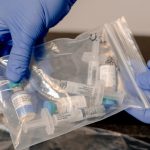
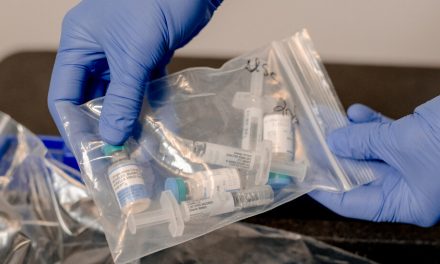
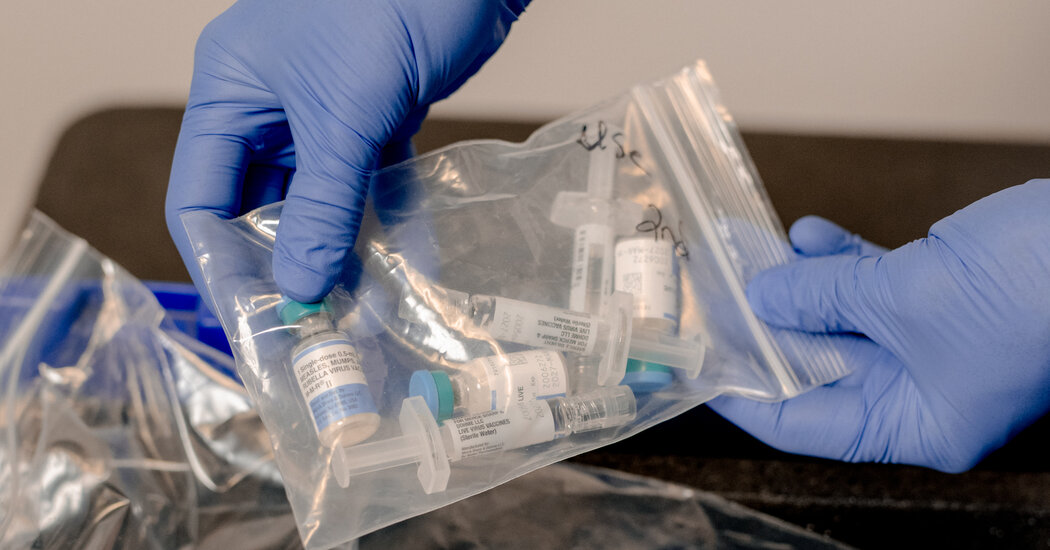
There is evidence that the outbreak was scary enough — and the government response was effective enough — that people got vaccinated. More than 16,800 doses of measles-mumps-rubella vaccine were administered statewide in January 2026, an increase of more than 40 percent compared to January 2025. In Spartanburg County, vaccinations increased 162 percent in January 2026 compared to January 2025.
Every push means a hard-fought victory. “Doctors need to somehow talk to skeptical parents without alienating them,” said Dr. Joshua Brownlee, assistant professor of pediatrics at the University of South Carolina School of Medicine, Greenville.
“You can’t wag your fingers too much,” he said. “You have to listen.”
The state has offered free vaccinations in health vehicles and parked them at a community center and churches. But the acceptance was disappointing.
From October to mid-February, the vans distributed 71 doses of the measles vaccine, 22 of which were to children, the state said.
But people may get their vaccine behind closed doors, through doctors and pharmacies, Dr. Jernigan, who resigned from the CDC
Health authorities, he said, need to provide some relief.
They need to make sure people “know how to get the vaccine without having to show up and stand in front of a camera,” Dr. Jernigan. “You try to meet people where they are, which is part of your work in public health.”
The measles vaccine is usually given in two doses when a child turns 1 year old and before they start kindergarten.
But the state health department has encouraged doctors to add a dose for babies ages 6 to 11 months who live or visit the outbreak area.
However, many parents want to do the opposite: delay vaccination or extend the time between doses because they think this will protect their child’s immune system.
“I’m not against vaccinations,” said Olga Grabovsky, whose husband is a partner at Prostor, a popular Eastern European grocery store in Spartanburg. Her two older children had received vaccinations, she said. But with the youngest, she said, “I’ve read a little more about it” and might delay it after talking to her doctor.
“I will decide what is right for my family,” she said. “I have that right.”
Some doctors say: Better late than never. Dr. Natalie Bikulege-Baum, a pediatrician in nearby Greenville, said, “Ultimately, if we can get a child vaccinated this way, then let’s do it.”
Sometimes real-life experience convinces parents. On a recent Friday, a blue and yellow van offered free vaccinations in the parking lot of Zion Hill Baptist Church in Inman, a semi-rural neighborhood of small wooden houses.
Over the course of four hours, a parent showed up. Tracy Hobbs brought her five-year-old twins, a boy and a girl, to be vaccinated.
Ms Hobbs had her eldest child, now seven, fully vaccinated as a baby. But after the child was diagnosed with autism at age two, she blamed the vaccine — and herself for allowing it.
She decided not to vaccinate her twins. But when it turned out they were also autistic, she said she did more research and read “Mom Google.”
Now she’s vaccinating her children, she said, not just for her but for “all the children around you.”
Georgia Gee and Kirsten Noyes contributed to the research.