












Outrage continues at UnitedHealth and other insurers following the killing of Brian Thompson
The assassination of UnitedHealthcare CEO Brian Thompson in late 2024 sparked a flood of public outrage against the health insurance industry. And since then, Americans’ anger has snowballed into deep distrust of companies.
Much of the current dissatisfaction stems from growing economic concerns: more and more people cannot afford the rising costs of insurance premiums and medical bills.
Consumers are directing their ire at giants like UnitedHealth Group, which owns UnitedHealthcare and a host of related companies, including Optum Rx, the large pharmacy benefit manager, and extensive networks of doctors. CVS Health, which owns major insurer Aetna, a drugstore chain and CVS Caremark; and Cigna, which operates Express Scripts and is a major insurer, have also drawn criticism.
“There is a huge backlash against corporate medicine right now,” said Jeff Goldsmith, a health care industry analyst. Not only did the public’s antipathy persist, he added, “If anything, it has expanded.”
Luigi Mangione, the defendant accused of killing Mr. Thompson. had no direct relationship with UnitedHealthcare, according to authorities and the company. But insurers’ practices were at the heart of the complaints in Mr. Mangione’s writings, which resonated as a flashpoint for the public.
On Friday, Mr. Mangione admitted killing Mr. Thompson when he pleaded guilty in federal court to charges of interstate stalking resulting in death and stalking using interstate facilities resulting in death. Both charges carry a maximum penalty of life in prison.
Federal and state lawmakers have called for the breakup of UnitedHealth Group and other large companies that now control decisions throughout the healthcare journey by insuring patients, employing their providers and dispensing their medications.
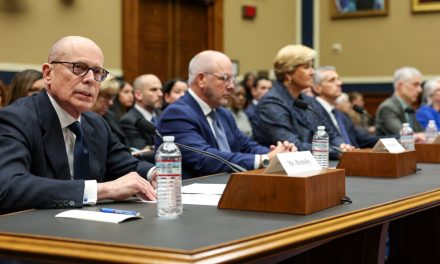
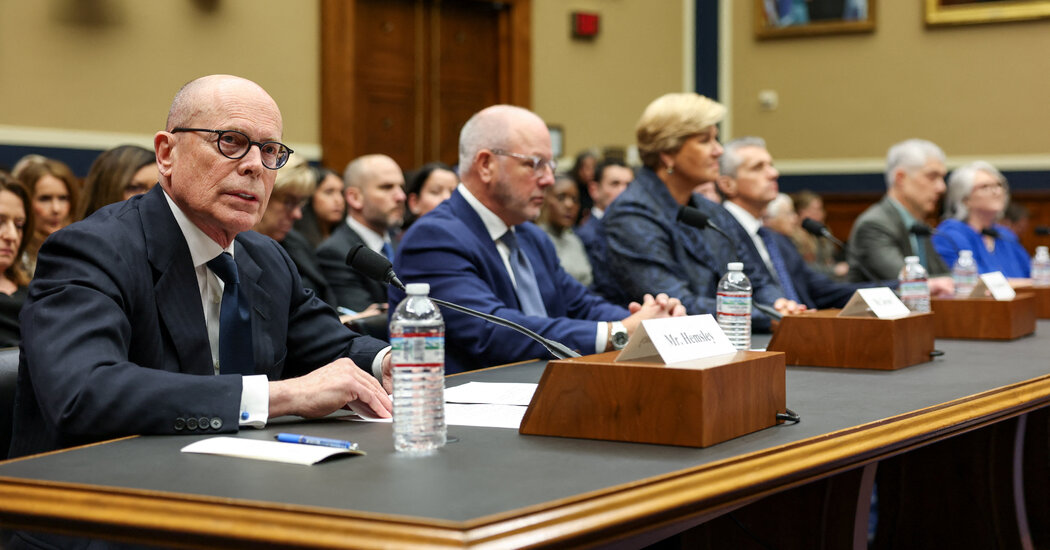
Both Republicans and Democrats have accused insurers in congressional hearings this midterm election year of the companies’ inability to rein in rising medical costs. In poll after poll and month after month, lawmakers have been reminded that Americans have cited health care costs as their top concern.
The companies tried to shift blame, countering that hospitals and pharmaceutical companies were responsible for the high prices. “The cost of health insurance is determined by the cost of health care,” Stephen J. Hemsley, the chief executive of UnitedHealth, told lawmakers in January.
But insurers and other companies were shocked by Mr. Thompson’s killing in midtown Manhattan. Companies have removed photos of executives from their websites, assigned additional security to their management teams and restricted public meetings.
But while many insurance executives were surprised by the ugliness of the discourse, others saw it as a clear message for the entire healthcare sector.
“It’s a moment of reckoning for the broader healthcare industry,” Dr. Sachin H. Jain, the managing director of SCAN Group and SCAN Health Plan, at the time. “We have exposed the feeling that things need to change.”
According to KFF, a nonprofit health research group, nearly 70 percent of adult insureds surveyed earlier this year described the process of getting an insurer’s approval before seeking medical care as burdensome.
Trust in insurers has declined slightly since 2024, according to a JD Power member satisfaction analysis. Only 30 percent of commercial plan participants described their insurer as a trustworthy partner for their health and well-being. Instead, people found that companies were focused on managing costs rather than helping them navigate the healthcare system.
In the immediate aftermath of Mr. Thompson’s killing, the industry, including then-UnitedHealth CEO Andrew Witty, vowed to do better. “We know the health care system is not working as well as it should,” he said, “and we understand people’s frustration about that.” Many companies promised to listen better to their customers and make approving a claim much less cumbersome.
Next year, the industry and UnitedHealth pledged to reduce the need for prior authorization for a medical test or treatment and speed decision-making when an insurer required authorization before treatment.
The companies say they have already eliminated millions of permit applications. UnitedHealth said it will reduce the number of treatments requiring prior authorization by 30 percent by 2026, and the company has also said it will exempt rural hospitals and pediatric patients from most authorization requirements. Optum Rx also said fewer medications needed to be reviewed.
But doctors and patients say there is little hard evidence that the companies’ actions have removed barriers to medical care. And a federal regulator recently criticized major insurers like UnitedHealthcare for denying care to people enrolled in private Medicare plans.
A KFF analysis released earlier this week provided mixed reviews: While the majority of procedural requests were approved, a large number of denials were overturned, raising concerns about the process. The report also found major differences between insurers.
“This new data confirms that the vast majority of prior permit applications are approved and responded to in less than a day, faster than federal standards,” Chris Bond, a spokesman for AHIP, an industry trade group, said in a statement. “Health plans continue to make steady progress on industry-wide efforts to standardize and simplify prior authorization and provide real-time responses to most electronic prior authorization requests in 2027.”
Under close scrutiny, UnitedHealth has sought to demonstrate its commitment to accountability. The company said it has established a board public responsibility committee and conducted numerous reviews of its operations, according to its most recent earnings release. Earlier this year, the company invited a group of reporters to its headquarters, where it gave presentations about its efforts to improve its responses to customer complaints.
Americans are also affected by new concerns about high insurance costs and rising out-of-pocket costs that are leaving many unable to pay for their care.
Many experts and insurers blame the double-digit decline in enrollment primarily on Republicans in Congress’ decision to eliminate additional subsidies under the Affordable Care Act. An estimated three million people have given up insurance coverage, and millions more are expected to do so in the coming years.
The nation’s major hospitals are already attributing the decline in coverage to a rise in unpaid medical bills and emergency room visits from the uninsured.
But even those who have insurance coverage, including employer-provided insurance, struggle to pay the cost of care. Less than half of American adults say they can consistently afford health care, according to a recent study by the West Health-Gallup Center on Healthcare in America, a partnership between Gallup and West Health, a group of nonprofit organizations focused on health care costs.
There is hardly any relief in sight. Health insurance plans predict higher costs in 2027, and many people will face both higher premiums and larger deductibles. Health care costs are a top issue for voters, and insurance companies are likely to remain a political target for both Democrats and Republicans in the coming weeks.